







This article is based on our REZCUE white paper which you can download here.

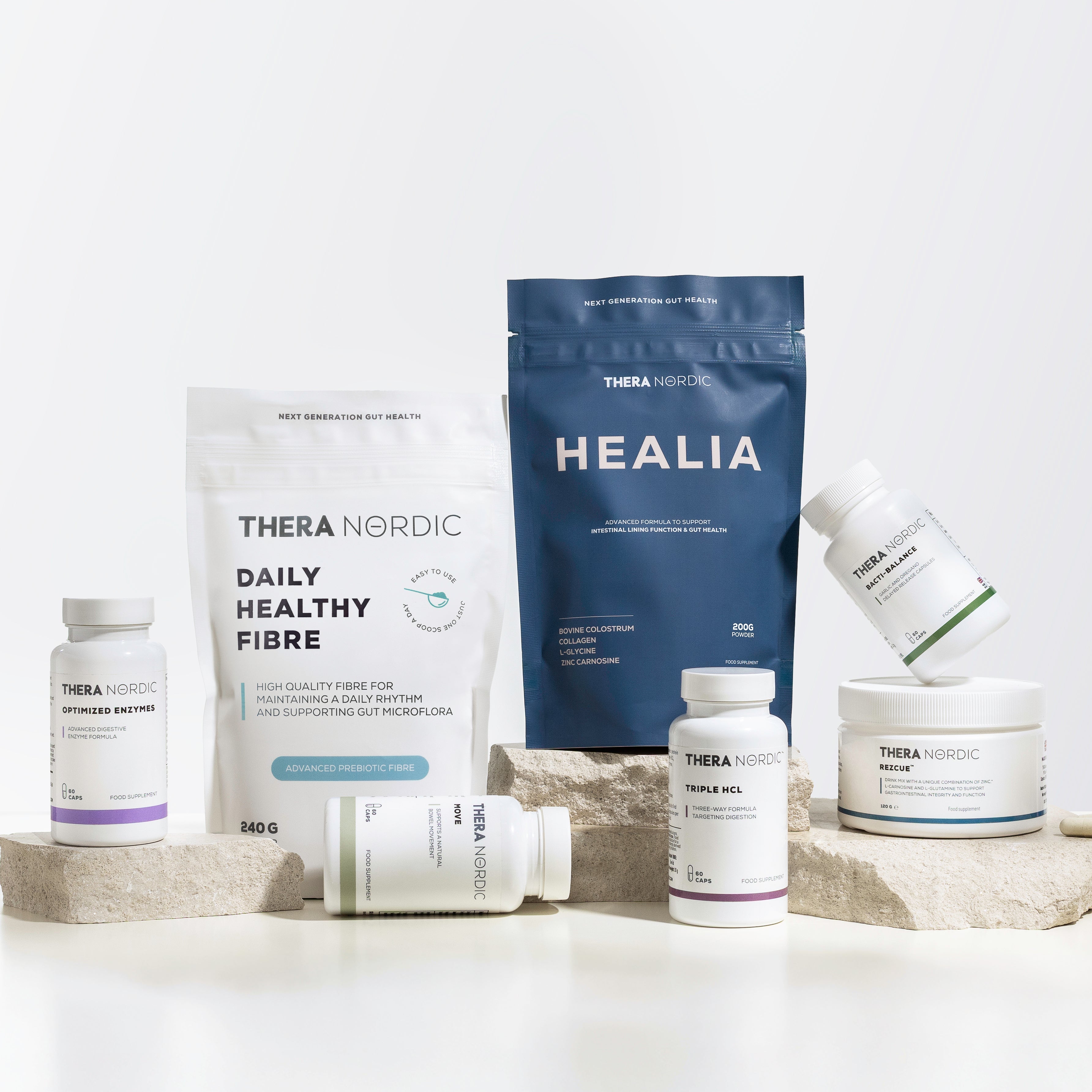
REZCUE combines two well-researched gut mucosal agents: pharmaceutical-grade Zinc L-Carnosine (37.5mg per scoop) and L-Glutamine (2,462mg per scoop). While the standard consumer guidance covers general gut health support, this article covers the clinical application protocols, intervention dosing thresholds, and condition-specific guidance we recommend for your patients.
Understanding the Mechanisms
L-Glutamine is the primary respiratory fuel for enterocytes and colonocytes. In GI pathology — whether from IBD, post-antibiotic mucosal damage, or chronic NSAID use — mucosal demand for glutamine increases significantly. The key clinical effects are:
- Upregulation of tight junction proteins (claudins, occludins, ZO proteins), directly reducing intestinal permeability
- Inhibition of NF-κB and STAT signalling pathways, suppressing pro-inflammatory cytokines including IL-6 and TNF-α
- Glutathione precursor activity, providing antioxidant defence particularly relevant in IBD and mucosal injury
- Synergistic activity with EGF and IGF for mucosal tissue regeneration
Zinc L-Carnosine operates via a unique mechanism. Its chelation chemistry allows it to undergo a ligand exchange reaction with albumin and body proteins, binding selectively to inflamed mucosal sites. This produces sustained, localised zinc release rather than broad systemic distribution — meaning the anti-inflammatory action is concentrated where it is needed most. Additional clinical effects include:
- Direct NF-κB inhibition and cytokine reduction (IL-6, TNF-α)
- Inhibition of H. pylori growth — clinically relevant for gastric ulcer and gastritis patients
- Stimulation of HSP70 (heat shock protein 70), strengthening mucosal resilience via cytoprotection
- Protective action against drug-, stress-, ethanol-, and irradiation-induced mucosal damage
- Independent of acid suppression — can be used synergistically with PPIs or as a standalone approach
Condition-Specific Application
Heartburn / GERD Initiate alongside the patient's existing PPI regimen. After 2 weeks of concurrent use, begin a supervised PPI wean as mucosal healing progresses. Standard dose throughout.
Stomach ulcer / gastritis Standard dose for ongoing management. For active ulceration, increase to intervention dose (4 scoops daily) until resolution is confirmed.
IBS Standard dose. L-Glutamine directly addresses the intestinal permeability component that underlies a significant proportion of IBS symptomatology, particularly in IBS-D presentations.
Crohn's / Ulcerative Colitis Standard dose for maintenance. Increase to intervention dose during flares. For patients with distal or rectal involvement, rectal administration is supported by the evidence: dissolve 2–4 scoops in warm water until clear and administer as a retention enema.
Pharyngitis / throat inflammation Prepare a concentrated solution (1–2 scoops in 50ml cooled boiled water). Instruct the patient to gargle for one minute and swallow. Repeat 2 or more times daily. Salt or natural disinfectants may be added. Particularly useful for patients who experience frequent throat infections or post-viral irritation.
Oral mucositis / mouth sores Same concentrated gargle protocol. Especially relevant for patients undergoing chemotherapy or radiotherapy, where REZCUE's cytoprotective mechanisms provide meaningful mucosal support during treatment.
NSAID co-administration For patients on ongoing NSAID or aspirin therapy, 2 scoops daily mitigates the small bowel mucosal injury that NSAID use induces. This is supported by capsule endoscopy evidence.
Drug Interactions to Note
- Levothyroxine: Zinc L-Carnosine may complex with levothyroxine, reducing absorption of both compounds. Advise taking REZCUE at least 1 hour after the thyroid medication. This is not a contraindication when timed correctly, but patients should be counselled explicitly.
- PPIs: Synergistic. REZCUE addresses the underlying mucosal pathology that PPIs suppress symptomatically, making it well-suited to supervised PPI weaning protocols.
- High-dose zinc monitoring: At intervention dose (4 scoops daily), patients receive approximately 32mg elemental zinc daily (4 × 8mg). For prolonged use beyond 3 months, monitor copper status and consider supplementation to maintain an appropriate zinc-to-copper ratio.
Patient Monitoring
Nausea is the most commonly reported side effect at higher doses — it is transient and benign. Advise patients to take REZCUE with food if this occurs. For IBD patients on immunosuppressant therapy, no interactions are currently known, but clinical monitoring of response is recommended.